
“Every [zine] is a test of a new idea.” –– Ocean Vuong
Zines (pronounced ‘zeens’) are noncommercial, often homemade or online publications, usually devoted to specialized and often unconventional subject matter.
Early countercultural movements relied on hand-made, physical media to find, build and connect with like-minded people. Today, however, independent, hyper-local publications serve as easy, low-barrier ways to disengage with the overwhelming digital noise.

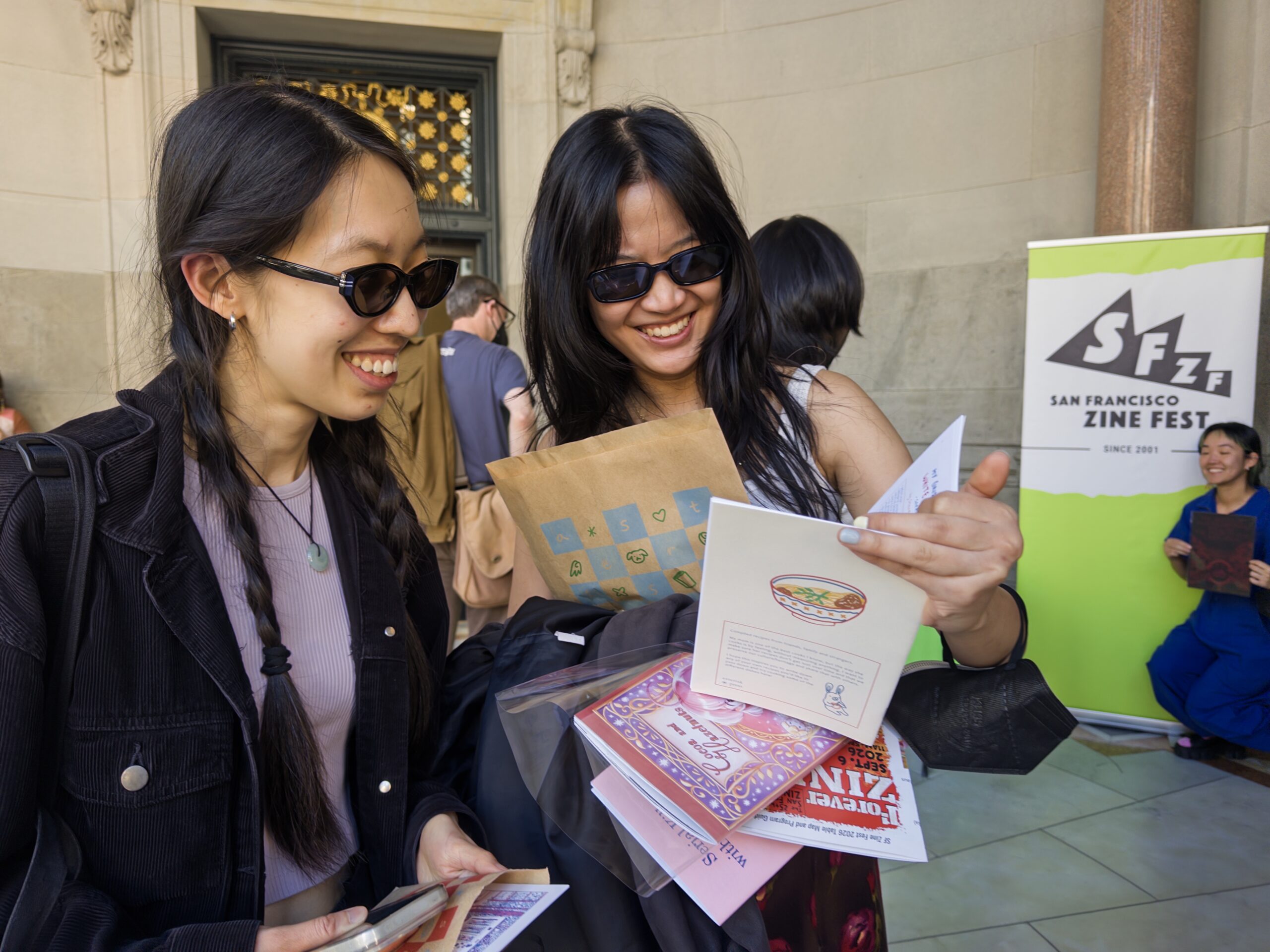
The Hibernia, San Francisco’s historic event space, was buzzing with energy at the 25th annual anniversary of Zine Fest. Since 2001, this event has connected, celebrated and inspired the city’s most creative artists and weirdos in the Bay Area.
While thousands were bustling in the crowded main hall as a warm afternoon glow shone through the Tiffany-style glass dome overhead, others were sitting on the concrete front steps, giggling and sharing their newest pieces of ephemera.
It was a space to interact and uplift the raw, unfiltered expression of people in the Bay Area.

“You really have to put your feelings out there to see them reflected back to you.”
The people make the culture
In a world bombarded by screens, subscriptions and “slop,” arts and crafts retailer Michael’s still dubbed 2026 as the “Year of Creative Living.” Analog hobby search terms increased 136% during the first quarter of the year.
Although it’s difficult to pinpoint the exact reason for this trend, these statistics correlate with the growing sense of widespread digital fatigue.
Having grown up in San Francisco surrounded by some of the world’s largest tech companies, Julian Maestas sustains the city’s underground print culture by making space for zines to continue to circulate through the city’s alternative communities.
“It’s comforting,” he said, leaning against the window of Dog Eared Bookstore, where he’s worked since 2019. “You really have to put your feelings out there to see them reflected back to you.”
Zines are physical representations of the local community, since anyone with an idea can walk into a library, print a few pages, staple them together and have their voice on their shelf, he said.
It’s cool because the things people are buying, reading and selling/trading can end up in our store, Maestas said. Every bookstore in the city has different inventories and looks based on the neighborhood’s interests.
To Maestas, going against automation––especially in San Francisco, a fertile ground for AI innovation––means defending local, non-automated human spaces like libraries and bookstores. It also means participating in small, tangible community-centered events like zinegatherings in parks or coffee shop bookclubs.

For other independent creators, like Hanne Williams-Baron and Adrian Matias Bell, reclaiming human-scale connection looks like sharing a table at this year’s Zine Fest to protest against generative AI.
Earlier this year, the duo channeled the grungy spirit that has long permeated San Francisco’s anti-capitalist, countercultural scene into their latest print project: a self-edited anthology, Queer Trans Histozine. This project carves out space for queer and transgender people all over the world to unpack and share their deeply personal, highly-nuanced relationships with hysterectomy surgery.
They described zinemaking as their most organic and natural medium for queer self-expression.
Because mainstream media institutions have historically erased, censored and misrepresented the queer experience, the community has always built its own internal support networks to preserve its history and find other like-minded people.
“We [the queer community] are very creative and fun and fabulous, which is what zinemaking is,” Matias Bell said. “I also think queer people are just historically used to communicating with each other in ways that sit outside of the mainstream. It’s a perfect match.”
The beauty of the zine project, he explained, was that it gave them both total creative ownership. It allowed them to publish a variety of deeply nuanced stories, capturing the multifaceted emotional realities that surround hysterectomies without being confined to a single narrative.

“The four corporations that are wielding the shit are straight up–no exaggeration–evil.”
Queers against techies
San Francisco is the epicenter of the AI boom, causing a new wave of wealthy tech industry workers to relocate to the city.
Despite frequent claims that the AI boom is a rare opportunity for the city to reinvest in community infrastructure, others believe the extreme social dependence on technology and soaring rent costs are minimizing the historic SF queer scene.
Williams-Baron and Matias Bell said the aggressive push for AI can be felt all over the city.
“It’s a spiritual, emotional and financial toll on the daily,” Williams-Baron said indignantly. “I hate how the AI industry is pitching itself as inevitable. I think they are banking on us not feeling our agency and our ability to push back.”
This vital need for self-expression is not new to the queer community, and is what propelled the art of zinemaking in the first place. For decades, those who felt unseen and unrepresented by mainstream society took matters into their own hands to find their people.
When dominant cultures offer no room for authentic identity, punk ethos encourages people to build their own.
Tom Jennings understood this reality intimately.
Living in San Francisco at a time when there weren’t many spaces for folks who were both queer and punk to exist, even within predominantly gay neighborhoods, he turned to the DIY press to find his community.
By launching his own punk zine, Homocore, he manifested a “queer-punk mythology of a culture” that truly “did not exist at the time.” But the longer he published, the louder this unfiltered expression became, eventually permeating the Bay Area’s underground scene.
This grassroots tendency––spanning from the seventies to the present day––reflects a historic pattern among queer people turning towards self-reliance when spreading information or creating community spaces.
Decades later, Jennings sees the same battle lines emerging around artificial intelligence: a struggle between mainstream forces and countercultural movements. While he does recognize that large language models are a fascinating technology likely to transform code writing and language analytics, he draws a sharp line at the corporations controlling them.
“The four corporations that are wielding the shit are straight up––no exaggeration––evil,” he said.
Even as Big Tech companies continue to expand, so does the public’s distrust in their ethos, with more people under 30 reporting that they are more concerned than excited about AI innovation.
Amidst phone addictions, algorithmic feeds and generative AI content, the residue of that punk, anti-corporate spirit remains. The autonomy of zinemaking offers an appealing avenue for people to prioritize genuine human connection and authentic voices.
For Williams-Baron and Matias Bell, creating Queer Trans Histozine was a powerful reminder of how important it is to embrace shared complexities and create spaces where we can come together to discuss them. They highlighted how dedicating time to slow down, brainstorm, structure and edit the anthology together significantly strengthened their relationship.
“Right now, I feel like the least that anybody can do is pick up that damn pen, put it on a page, ask yourself what you think about what’s going on here, tell the world about it… So, yeah, get more punk now!”